
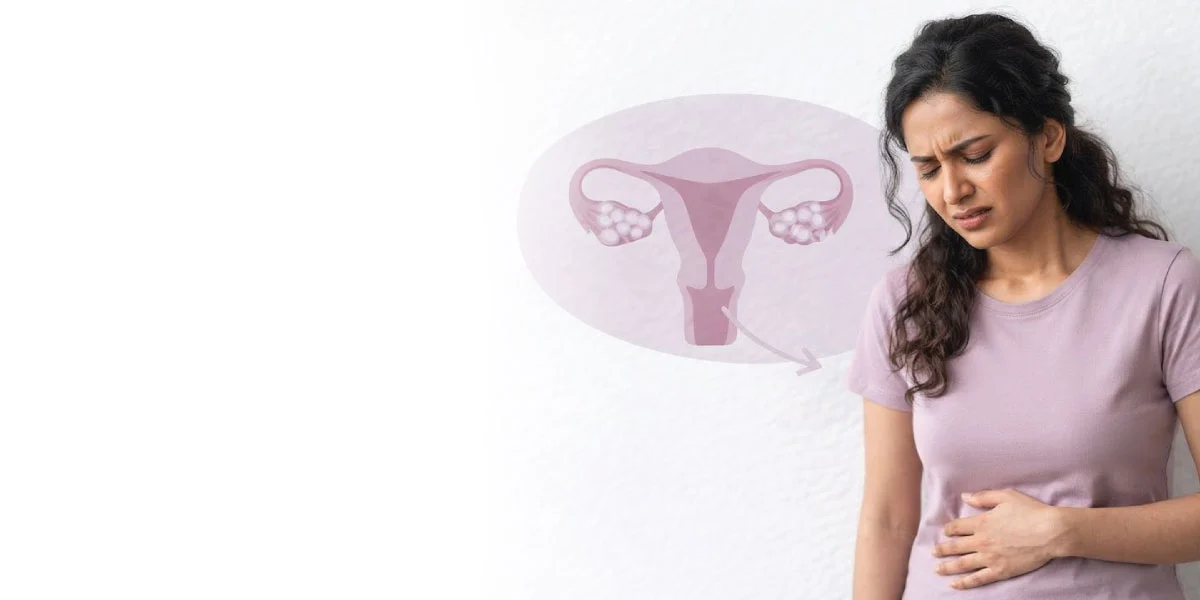
PCOS can be diagnosed with hormone and blood tests, pelvic ultrasounds, and based on your symptoms. Irregular periods, excessive acne and facial hair, weight gain, and difficulty getting pregnant are some common signs of PCOS.
How Is PCOS Diagnosed? Tests, Symptoms & When to See a Gynaecologist
Polycystic Ovarian Disorder is a female hormonal condition that affects your menstrual cycles, ability to get pregnant, skin, hair, and weight. In PCOS, androgen, a male hormone, is present in larger-than-normal amounts in a female body.
Although your body naturally produces androgen, an excess of it can cause acne, facial hair, and weight changes. PCOS can affect a woman’s fertility, as it may disrupt the ovulation cycle. The question is: how is it diagnosed, how exactly do you know if you have PCOS, and what’s the most commonly recommended PCOS treatment in Mulund?
When You Should See a Gynecologist?
Here’s when it’s worth consulting a gynecologist:
- You have unpredictable periods
- You haven’t gotten your period for several months
- You develop oily skin or acne
- You have gained significant weight or are having trouble losing the extra pounds
- You notice excessive hair growth on the face, back, or neck
- You are having trouble conceiving
PCOS Diagnosis
Sometimes, small skin changes, such as sudden acne or pigmentation, along with hair thinning, might be much more than cosmetic concerns. These could be signs of PCOS. Discussing your symptoms with a gynecologist is often the first step in getting a proper diagnosis.
PCOS Symptoms
There’s no specific PCOS test that can confirm the diagnosis. Your doctor may order a combination of tests alongside your symptom assessment to reach a proper diagnosis. You may be asked about your menstrual cycles, ovulation, whether you are trying to get pregnant, and if you have a family history of PCOS.
Typically, you need to have at least two of these three symptoms to have PCOS:
- Irregular menstrual and ovulation cycles
- Excess androgen levels, which appear in blood tests or are detected through symptoms, such as male-pattern baldness, acne, or excessive hair growth on the face or body
- Ovarian cysts found on the ultrasound scan
For example, if your ultrasound shows ovarian cysts and you have excessive facial or body hair, a gynecologist in Mulund will diagnose PCOS.
Common Tests Used to Diagnose PCOS
A physical exam, where your doctor checks your skin, hair, blood pressure, and BMI, is usually the starting point for PCOS screening. Later, the following tests may be advised:
- Pelvic Ultrasound: A pelvic ultrasound is mainly used to check your ovaries for signs of multiple follicles. The ovaries of a PCOS patient might appear 2-3 times larger than normal ovaries. Again, ovarian cysts alone do not confirm PCOS.
- Hormone Tests: Your gynecologist may check testosterone, the elevated levels of which can suggest PCOS, as well as your thyroid hormone and prolactin. In selected patients, an AMH test could be advised, and its elevated levels might be a sign of PCOS.
- Pregnancy Test: Women miss periods when they are pregnant. So, if you are sexually active, pregnancy is the first thing your doctor may want to rule out before linking your irregular periods to PCOS.